

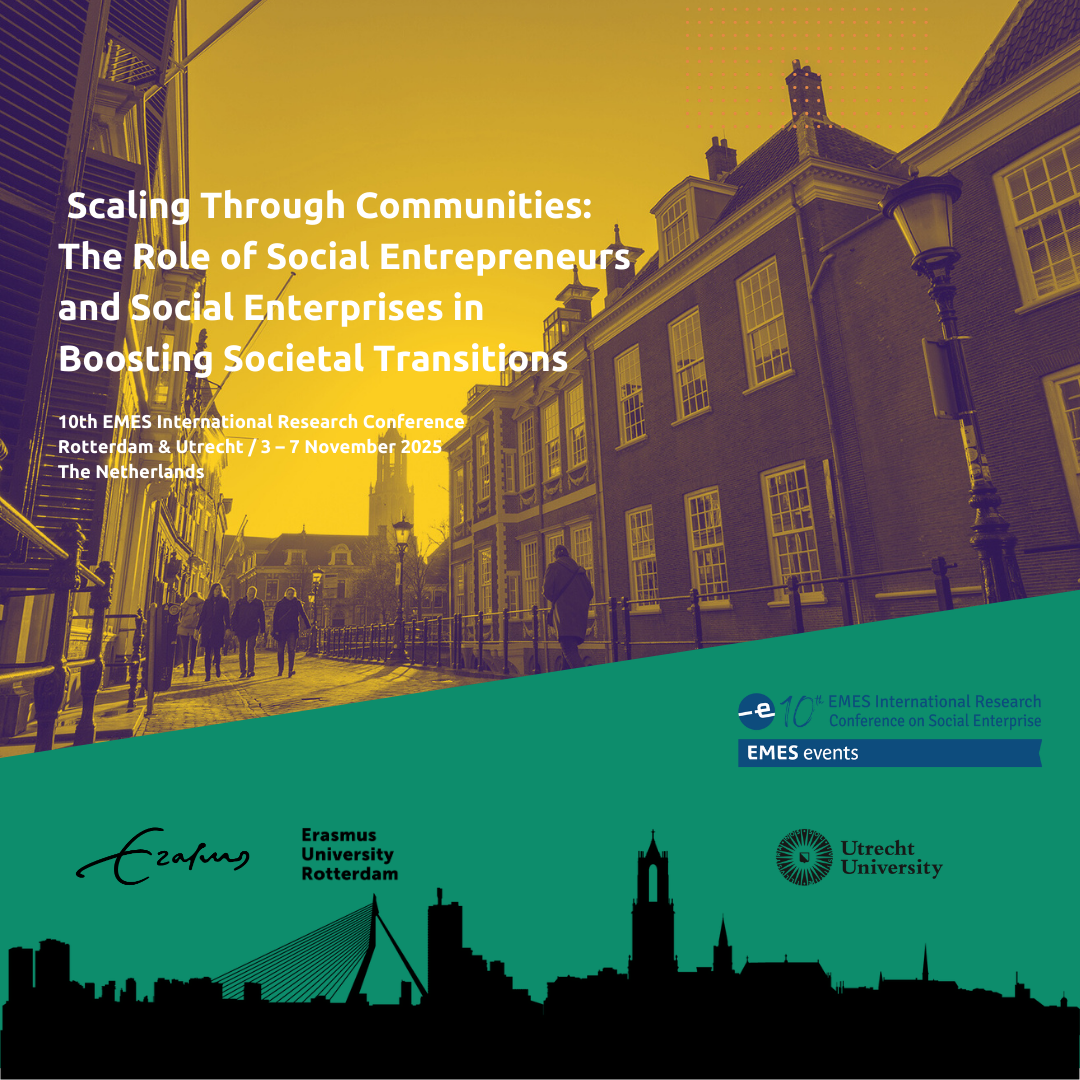
The 10th edition of the EMES International Research Conference on Social Enterprise will take place in the Netherlands, marking the first time it will be hosted across two locations. This milestone edition is particularly significant also as the network continues to consolidate after the celebration of its 20th anniversary back in 2022.
The EMES Conference is a key event for SE scholars worldwide, as well as PhD students and Early Career Researchers, offering them a unique opportunity to engage with the field and expand their networks. Moreover, EMES conferences are known for attracting policymakers and practitioners, both internationally and from the host country, fostering dialogue between research and practice.
This year, we are excited to introduce a Practitioners’ Lab, and we’ll be sharing more soon.
This edition will provide a unique opportunity to explore the Dutch ecosystem for social enterprise, offering valuable insights into the country’s initiatives, and key actors in the field.
The Netherlands is quickly becoming a leader in social enterprise, where innovation and social impact are deeply intertwined. With a strong ecosystem of businesses, networks, and initiatives, Dutch cities offer a unique perspective on how social entrepreneurship can thrive. From national trends to local examples, the country provides valuable lessons on how policy, community, and entrepreneurial spirit can come together to drive positive change.
Current social enterprise landscape in the Netherlands
The latest European Social Enterprise Monitor (ESEM), presented at the World Economic Forum in Davos, highlights the Netherlands as a leader in social enterprise. With higher profitability, greater reinvestment in impact, and a more mature ecosystem than the European average, Dutch social enterprises demonstrate that financial success and social purpose can reinforce each other. For researchers, these findings offer valuable insights into the conditions that foster a thriving social enterprise sector. What drives this success? And how can policy, legal frameworks, and market conditions further enhance impact? While the Netherlands performs well, the lack of political support and a dedicated legal form remains a key barrier—a challenge mirrored in many other countries.
Rotterdam: a living lab for social innovation
Rotterdam, a city shaped by resilience, has transformed from the ruins of World War II into a hub of entrepreneurship and social innovation. Its striking architecture—like the Erasmus Bridge and Cube Houses—symbolizes its forward-thinking spirit, which also drives its social enterprise ecosystem.
For researchers, Rotterdam offers a wealth of case studies. BlueCity, a circular economy hub in a former swimming complex, fosters startups tackling zero-waste solutions and sustainable production. Citizen-driven initiatives also thrive: the Afrikaanderwijk Cooperative empowers local businesses, the Voedseltuin community garden supplies food for social projects, and the Delfshaven Energy Cooperative distributes local renewable energy. This blend of historical transformation, social entrepreneurship, and grassroots action makes Rotterdam an inspiring city for those studying resilient, community-driven economies.
Utrecht: old city, young at heart
Utrecht is a city where heritage meets progress. As one of the Netherlands’ oldest cities, it combines a deep-rooted history with a strong culture of entrepreneurship and social change.
With a network of nearly 300 impact entrepreneurs, Utrecht fosters collaboration through platforms like Social Impact Factory and Impact030, which support sustainable and circular business models. Local community initiatives bring people together, for example: BuurtBuik turns surplus food into shared meals, while ACU eetcafé operates as a volunteer-run space serving rescued ingredients. The city’s Healthy Urban Living strategy prioritizes well-being and sustainability, inspiring enterprises like BikeFlip, which gives children’s bikes a second life through a circular subscription model, and De Moestuin, a green space offering work opportunities for people facing employment barriers.